

What Is M5Stack CardPuter and Why Program It?
Quick Answer: M5Stack CardPuter is a compact, credit-card-sized microcontroller development board combining an ESP32 processor, built-in keyboard, and display into one portable device. It runs custom firmware using Arduino IDE, MicroPython, or UIFlow visual programming, making it ideal for IoT prototyping, data logging, and embedded system education. Released in 2022 and actively supported through 2026, it bridges the gap between single-board computers and traditional microcontrollers.
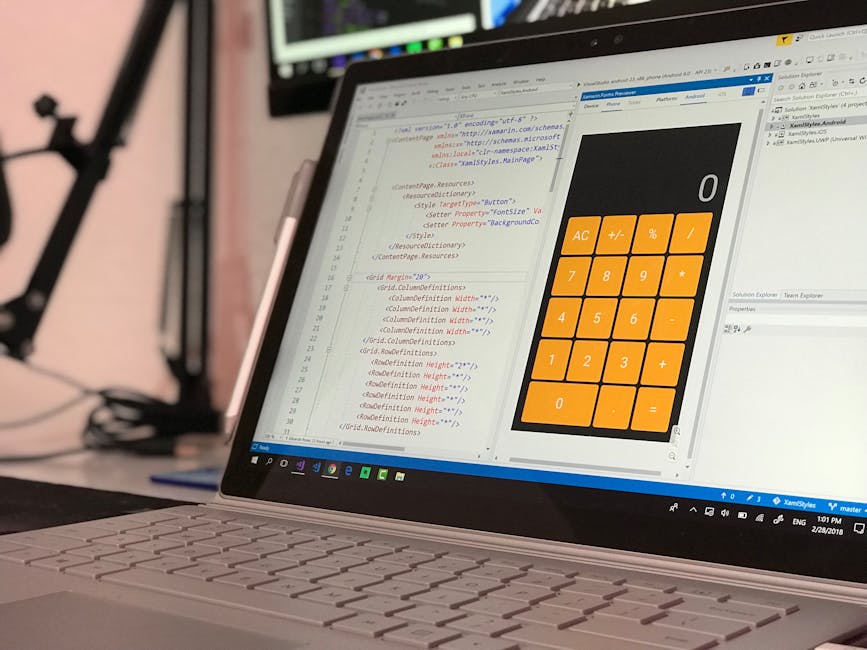
The CardPuter appeals to makers, students, and professionals because it eliminates the need for external peripherals. Its integrated keyboard and screen mean you can write and test code directly on the device. The ESP32 chipset provides Wi-Fi and Bluetooth connectivity, making remote projects straightforward. Whether you’re building a weather station, home automation controller, or portable terminal, CardPuter handles the task efficiently.
Key Takeaway: M5Stack CardPuter is a self-contained development platform that combines processing power, input/output, and networking in a pocket-sized form factor.
What Are the Core Hardware Specifications You Need to Know?
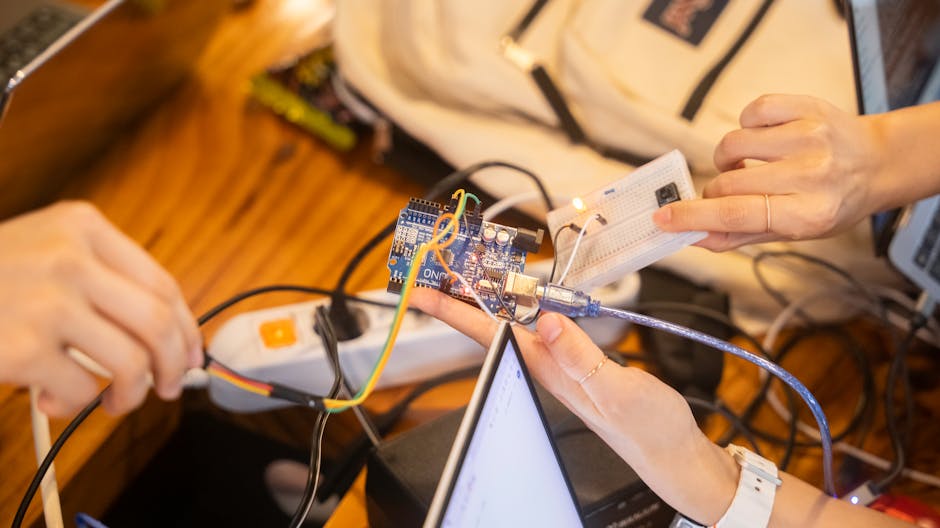
Understanding CardPuter’s hardware is essential before writing your first program. The device features an ESP32-S3 dual-core processor running at 240 MHz with 8 MB of Flash storage and 8 MB of PSRAM. These specs provide enough power for real-time tasks while keeping power consumption low.
- Display: 2.4-inch IPS LCD screen with 320×240 pixel resolution.
- Input: 54-key QWERTY keyboard with trackpad support.
- Connectivity: Wi-Fi 802.11 b/g/n and Bluetooth 5.0 LE.
- Ports: USB-C for power and data, microSD card slot for expansion.
- Sensors: Accelerometer, gyroscope, and magnetometer built-in.
- Power: 1000 mAh lithium battery with USB charging.
The ESP32-S3 is the same processor found in many professional IoT devices. Its dual cores allow simultaneous task execution—one core handles the display while another processes sensor data. PSRAM expansion enables larger applications and faster graphics rendering compared to older CardPuter variants.
Memory and Storage Considerations
Flash storage holds your program code and file system. With 8 MB total, you have roughly 4-5 MB available after the bootloader and partition table. Larger applications may require external microSD cards for data storage or additional code modules.
Key Takeaway: CardPuter’s ESP32-S3 processor and 8 MB PSRAM provide sufficient performance for most IoT and embedded applications.
How Do You Set Up Your Development Environment?
Before writing code, you need the correct tools installed. The Arduino IDE remains the most popular choice for CardPuter development in 2026. It’s free, widely supported, and has extensive library compatibility. MicroPython offers a Python-based alternative for those preferring interpreted languages, while UIFlow provides visual block-based programming.

Installing Arduino IDE and Board Support
Download the latest Arduino IDE from Arduino’s official website. Version 2.0 or higher is recommended for 2026 projects. Once installed, add M5Stack’s board support package through the Boards Manager.
- Open Arduino IDE and navigate to Preferences.
- Paste this URL in “Additional Boards Manager URLs”:
https://m5stack.oss-cn-shenzhen.aliyuncs.com/resource/arduino/package_m5stack_index.json - Open Boards Manager and search for “M5Stack”.
- Install the latest M5Stack-ESP32 package.
- Select “M5Stack CardPuter” from the Tools menu under Board.
Restart Arduino IDE after installation. Connect your CardPuter via USB-C cable. The IDE should automatically detect the COM port. If not, manually select it under Tools > Port.
Installing Required Libraries
M5Stack provides libraries that simplify hardware interaction. Use the Library Manager to install essential packages for your projects.
- M5Unified: Universal library supporting all M5Stack devices.
- M5GFX: Graphics library for display rendering and animations.
- M5Keyboard: Keyboard input handling and event management.
- WiFi: Built-in Arduino library for network connectivity.
- MQTT: Third-party library for IoT messaging protocols.
Search for each library by name in the Library Manager and click Install. M5Unified is the foundation—most other libraries depend on it. Always check for updates monthly to get bug fixes and new features.
Key Takeaway: Arduino IDE with M5Stack board support and M5Unified library form the essential development foundation.
What Does Your First CardPuter Program Look Like?
Writing a simple program teaches you the core patterns. Let’s build a program that displays text and reads keyboard input. This “Hello World” variant introduces display control and user interaction simultaneously.

Basic Display and Keyboard Example
Here’s a complete working program that initializes the device, displays text, and responds to keypresses:
#include <M5Unified.h>

void setup() {
  M5.begin();
  M5.Display.setTextSize(2);
  M5.Display.println("CardPuter Ready!");
  M5.Display.println("Press any key...");
}

void loop() {
  M5.update();

  if (M5.Keyboard.isPressed()) {
    char key = M5.Keyboard.lastKey();
    M5.Display.printf("Key: %cn", key);
  }

  delay(10);
}
This code initializes M5Unified, sets text size to 2 (larger font), and prints welcome messages. The loop continuously checks for keyboard input. When a key is pressed, it displays the character on screen. The 10-millisecond delay prevents CPU overload.
Understanding the Code Structure
Every Arduino sketch has setup() and loop() functions. Setup runs once at startup—use it for initialization. Loop runs repeatedly—use it for continuous tasks like reading sensors or checking user input.
M5.begin()initializes all CardPuter hardware including display, keyboard, and sensors.M5.Displayis the display object; use it for all screen operations.M5.Keyboardhandles input; checkisPressed()to detect key events.M5.update()refreshes internal state; call it once per loop iteration.
Key Takeaway: Start with M5.begin(), use M5.Display for output, and M5.Keyboard for input in every program.
How Do You Work With CardPuter’s Display and Graphics?
The 2.4-inch display is your primary interface. M5GFX library provides drawing functions for shapes, text, and images. Learning these functions unlocks creative possibilities from simple dashboards to animated interfaces.

Drawing Shapes and Colors
M5GFX supports drawing rectangles, circles, lines, and filled shapes. Colors use RGB565 format or predefined constants. Here’s how to draw common shapes:
// Clear screen with black background
M5.Display.fillScreen(BLACK);

// Draw a red rectangle
M5.Display.fillRect(10, 10, 100, 50, RED);

// Draw a blue circle
M5.Display.fillCircle(160, 120, 30, BLUE);

// Draw a white line
M5.Display.drawLine(0, 0, 320, 240, WHITE);

// Display text in yellow
M5.Display.setTextColor(YELLOW);
M5.Display.drawString("Status: OK", 50, 100);
Color constants like RED, GREEN, BLUE are predefined. You can also specify custom colors using M5.Display.color565(r, g, b) for 24-bit RGB values. Remember that the display is 320×240 pixels—plan layouts accordingly.
Creating a Simple Dashboard
Combine shapes and text to build functional interfaces. A dashboard might display temperature, humidity, and system status in organized sections.
- Divide the screen into regions using rectangles as containers.
- Update only changed values to reduce flickering.
- Use consistent fonts and colors for professional appearance.
- Test layouts on the actual 320×240 screen, not just a computer monitor.
Key Takeaway: M5GFX provides powerful graphics functions; plan your layout before coding to maximize the 320×240 pixel display.
How Do You Connect CardPuter to Wi-Fi and the Internet?
Wi-Fi connectivity enables cloud integration, remote monitoring, and IoT applications. CardPuter’s built-in Wi-Fi module supports standard 802.11 networks. Connecting requires just a few lines of code and your network credentials.
Basic Wi-Fi Connection
Here’s the minimal code to connect to Wi-Fi and display the IP address:
#include <M5Unified.h>
#include <WiFi.h>

const char* ssid = "YourNetworkName";
const char* password = "YourPassword";

void setup() {
  M5.begin();
  M5.Display.println("Connecting to Wi-Fi...");

  WiFi.mode(WIFI_STA);
  WiFi.begin(ssid, password);

  int attempts = 0;
  while (WiFi.status() != WL_CONNECTED && attempts < 20) {
    delay(500);
    M5.Display.print(".");
    attempts++;
  }

  if (WiFi.status() == WL_CONNECTED) {
    M5.Display.println("nConnected!");
    M5.Display.println(WiFi.localIP());
  } else {
    M5.Display.println("nFailed to connect.");
  }
}

void loop() {
  M5.update();
}
Replace “YourNetworkName” and “YourPassword” with actual credentials. The code attempts connection for up to 10 seconds. Once connected, it displays your local IP address for network communication.
Security Best Practices
Never hardcode passwords in production code. Use EEPROM or file storage to keep credentials separate from source code. For public projects, implement secure credential management systems.
- Store Wi-Fi credentials in EEPROM or microSD card files.
- Use HTTPS for sensitive data transmission.
- Implement certificate validation for cloud connections.
- Change default passwords on any connected services.
Key Takeaway: Wi-Fi connection requires just SSID and password; separate credentials from code for security.
What Practical Projects Can You Build With CardPuter?
Real-world projects teach advanced techniques while producing useful devices. CardPuter’s compact form factor suits portable applications. Here are proven project categories with implementation tips.
Weather Station
Combine external sensors with Wi-Fi to create a portable weather device. Connect temperature and humidity sensors via I2C or serial protocols. Fetch cloud data using HTTP requests to display forecasts alongside local readings.
- Use DHT22 or BME680 sensors for temperature and humidity.
- Query weather APIs like OpenWeatherMap for forecasts.
- Display current conditions and hourly predictions on screen.
- Log data to microSD card for historical analysis.
Home Automation Controller
CardPuter makes an excellent wireless remote for smart home systems. Program it to send MQTT messages controlling lights, locks, and appliances. The keyboard enables quick command entry without complex menus.
Use MQTT to communicate with a central hub or directly with smart devices. Define button mappings for common commands—press ‘L’ for lights, ‘D’ for doors. Store configurations on microSD for easy customization across multiple devices.
Data Logger
Log sensor data to microSD cards for later analysis. Useful for environmental monitoring, equipment diagnostics, or scientific experiments. CardPuter’s battery enables portable deployment in remote locations.
Key Takeaway: CardPuter suits weather stations, home automation, and data logging—projects leveraging its portability and networking.
How Do You Debug CardPuter Programs?
Debugging is essential for troubleshooting issues. CardPuter provides multiple debugging methods: serial output, on-screen display, and external tools. Effective debugging saves hours compared to guessing.
Serial Monitor Debugging
Connect to the serial monitor in Arduino IDE to view debug messages. Use Serial.println() to output variable values and program status.
void setup() {
  M5.begin();
  Serial.begin(115200);
  Serial.println("Setup started");

  // Your initialization code

  Serial.println("Setup complete");
}

void loop() {
  M5.update();

  if (M5.Keyboard.isPressed()) {
    Serial.printf("Key pressed: %cn", M5.Keyboard.lastKey());
  }

  delay(10);
}
Open Serial Monitor (Ctrl+Shift+M) after uploading. Set baud rate to 115200 to match the code. Messages appear as your program runs, helping identify where issues occur.
On-Screen Debugging
Display debug information directly on CardPuter’s screen. Useful when serial connection isn’t available or you need visual feedback during operation.
- Print variable values to screen at program start.
- Display sensor readings in real-time during loop execution.
- Show connection status and error messages.
- Use different text colors to indicate states (green for success, red for errors).
Key Takeaway: Combine serial monitor and on-screen output for comprehensive debugging coverage.
What Are Common Pitfalls and How Do You Avoid Them?
Learning from others’ mistakes accelerates your development. CardPuter has specific gotchas that frustrate newcomers. Understanding these prevents wasted debugging time.
Memory and Performance Issues
CardPuter’s 8 MB Flash and 8 MB PSRAM seem spacious but fill quickly with large programs. Inefficient code consumes memory and slows execution. Monitor your binary size during compilation.
- Avoid storing large strings in RAM; use PROGMEM for constants.
- Limit simultaneous network connections to prevent memory exhaustion.
- Use efficient data structures—arrays instead of linked lists when possible.
- Profile your code to identify performance bottlenecks.
Power Management
CardPuter’s 1000 mAh battery depletes quickly under heavy load. Wi-Fi and display consume the most power. Implement sleep modes for portable applications requiring extended runtime.
Use M5.Power.deepSleep() to enter low-power mode between sensor readings. Wake timers or external interrupts resume operation. This technique extends battery life from hours to days in data logging applications.
Display Refresh and Flickering
Updating the entire display every loop iteration causes visible flickering. Redraw only changed regions. Use double-buffering techniques for smooth animations.
Key Takeaway: Monitor memory usage, implement power management, and optimize display updates to avoid common performance problems.
Frequently Asked Questions
Can You Program CardPuter With Python?
Yes, MicroPython is fully supported. Download the MicroPython firmware from M5Stack’s GitHub repository. Flash it using esptool.py or the M5Burner utility. Once installed, use Thonny IDE or WebREPL for interactive Python development. Python is easier to learn than C++ but slightly slower in execution.
How Much Does a CardPuter Cost?
In 2026, M5Stack CardPuter costs approximately $35-45 USD depending on vendor and region. Check the official M5Stack website for current pricing and availability. Educational discounts may apply for bulk purchases.
What’s the Battery Life During Normal Use?
The 1000 mAh battery provides 4-6 hours of continuous use with Wi-Fi and display active. Battery life extends to 24-48 hours with sleep modes enabled. Heavy computation or gaming reduces runtime to 2-3 hours. Actual duration depends on your specific application.
Can CardPuter Connect to Bluetooth Devices?
Yes, the ESP32-S3 supports Bluetooth 5.0 LE. Use the standard Arduino Bluetooth libraries or M5Stack’s wrapper functions. You can connect to wireless sensors, controllers, and smartphones. Bluetooth consumes less power than Wi-Fi for short-range communication.
Is CardPuter Suitable for Beginners?
Absolutely. CardPuter is designed for educational use with comprehensive documentation and community support. Start with simple programs like the keyboard input example, then progress to sensor integration and networking. The built-in keyboard and display eliminate external hardware complexity.
Where Can You Find CardPuter Libraries and Examples?
The M5Stack GitHub repository contains official libraries, examples, and documentation. Arduino’s Library Manager provides easy installation. Community forums and YouTube tutorials demonstrate real-world projects and troubleshooting techniques.
How Do You Continue Learning and Building Advanced Projects?
Mastering CardPuter programming requires hands-on practice beyond basic examples. Join the M5Stack community on GitHub and Discord to share projects and ask questions. Study open-source projects to understand advanced techniques like MQTT integration, cloud connectivity, and sensor fusion.
Progress from simple programs to multi-sensor systems. Combine Wi-Fi, Bluetooth, and multiple sensors in a single application. Implement data visualization on the display while logging to cloud services. These complex projects teach real-world embedded systems design.
Contribute your projects to the community. Sharing code and documentation helps others while improving your own skills. Document your projects thoroughly with comments and README files explaining functionality and usage.
Key Takeaway: Continuous learning through community engagement and progressively complex projects transforms CardPuter from a toy into a professional development tool.




Write Your Review
No reviews yet. Be the first to share your experience!